Galvanized at end of life
Corroded bore, rusty water, falling pressure. Repair is genuinely pointless once the whole system is this far along.
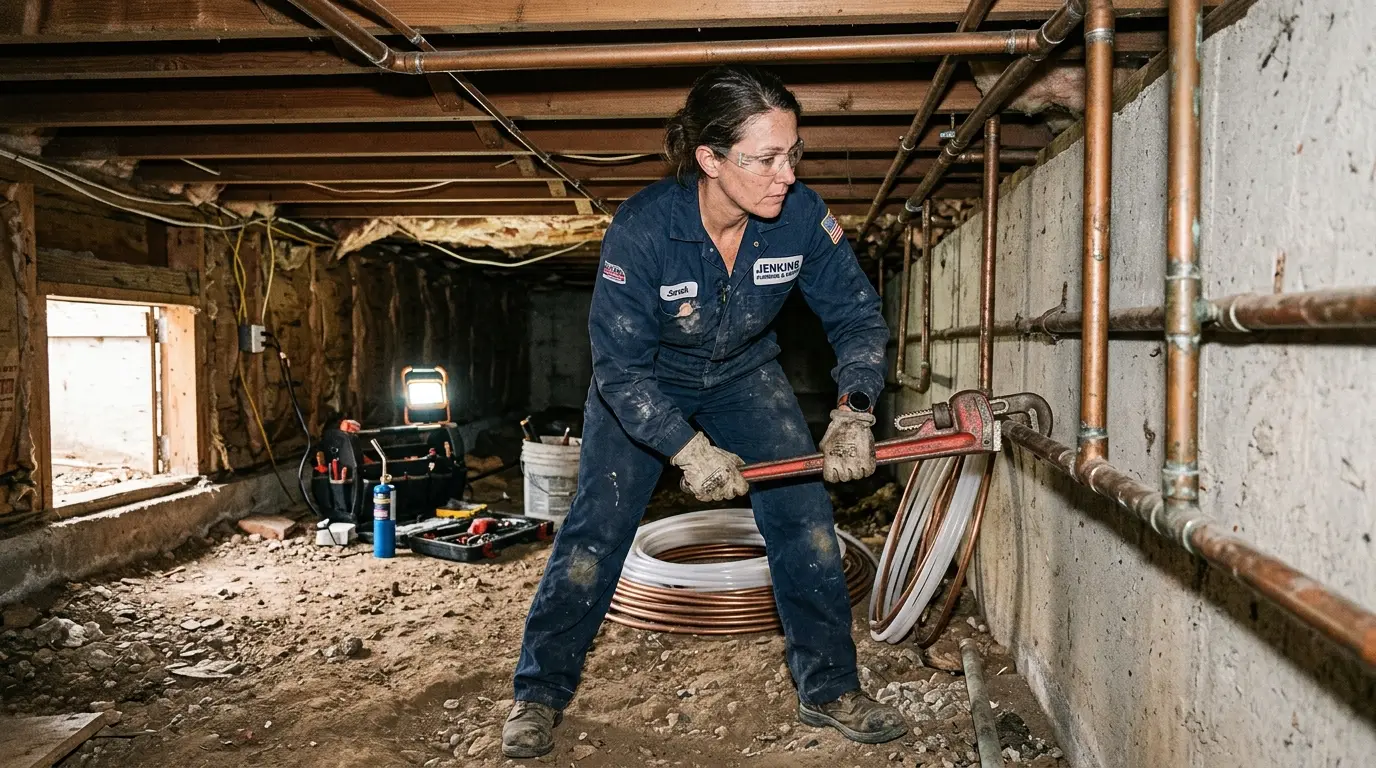
After the third leak in two years, repairs stop being repairs and start being instalments. Repiping replaces the supply system on a planned schedule, with the water on most nights and the openings in places you agreed to.
How many leaks in the last three years? That is the deciding question.
Every leak repair is a good decision in isolation. The trouble is that a house with failing pipe material does not have one leak, it has a series, and each repair is priced as if it were the last. At some point the arithmetic turns: three or four repairs plus the drywall work plus the disruption exceeds the cost of replacing the system once.
The signal is pattern, not severity. One pinhole in copper is bad luck. The second and third in the same era of pipe are the material telling you what it intends to do. Same with galvanized: once you are getting rusty first-draw water and pressure that has dropped at every fixture, patching a section moves the failure a few feet along.
Repiping also fixes things repairs never touch. Flow comes back at every fixture because you are no longer feeding the house through a corroded bore. Hot water arrives sooner because runs get sized and routed properly. And the failure risk drops to near nothing, which matters if you have ever come home to water coming through a ceiling.
Three or more of these and repiping deserves a real price.
A remodel is the cheapest moment to repipe, because the access is already being paid for.
We walk the house and mark where access is needed.
Two things drive it locally: pipe material by era, and water. Hard imported water and high static pressure in parts of central Orange County accelerate the internal wear on both galvanized steel and thin-wall copper. Homes that would have got another fifteen years elsewhere reach the end of the line here sooner.
The era map is fairly reliable. Pre-1960 construction, common in and around Old Town, generally has galvanized somewhere in the system unless it has been replaced. Sixties through eighties tract housing has copper, some of it thin-wall, some of it under slab. A subset of nineties-era homes has first-generation plastic fitting systems with their own well-documented failure pattern.
Corroded bore, rusty water, falling pressure. Repair is genuinely pointless once the whole system is this far along.
Pinholes appearing in clusters, often on the hot side first. The second and third leak are the ones that justify repiping.
A repipe overhead takes the entire distribution out of the concrete, ending the slab leak cycle rather than repairing it again.
Certain first-generation fitting systems became brittle. Failures cluster at fittings and are unpredictable in timing.
The point of a good repipe is that you know what is happening before it happens.
Every fixture counted, the existing routing traced, and access points marked and agreed with you. You get a written scope: materials, routing, number of openings, schedule and price.
Permit pulled, then the house prepared, floors covered, furniture moved away from access points, work areas contained before anything is opened.
New lines run through attic and wall cavities, sized properly and supported correctly, with the old system left in place and live for as long as possible.
Fixtures transferred to the new system, the old lines isolated and abandoned, then the whole system pressure tested and every fixture run and checked.
City inspection, then access openings patched. We tell you clearly what level of finish is included and where a paint or texture trade will do better than we will.
Fixture count, materials, access points and schedule in writing.
Two real material choices, and two real scope choices.
Flexible tubing with fewer joints, faster to install through existing cavities, and tolerant of hard water and pressure variation. Fewer openings because it snakes where rigid pipe cannot.
Trade-off: Needs correct fittings and support; must be protected from UV and rodent damage in certain locations.
Rigid, long-established and preferred by some owners on principle or for resale. Handles high temperature well and is not affected by UV.
Trade-off: Higher material cost, more labour, more openings, and the same water chemistry that thinned the original.
Every supply line in the house replaced, hot and cold, to every fixture. One project, one price, one permit, and the risk is gone.
Trade-off: Largest upfront cost and the most disruption, concentrated into a few days.
One branch or one side of the house (the hot side, a bathroom group, the kitchen wet wall) where the rest of the system is genuinely sound.
Trade-off: Lower cost now, but two partials usually cost more than one full repipe.
Repipe pricing is driven by fixture count, number of stories, access difficulty and material. A single-storey slab home with an accessible attic is the straightforward case. A two-storey with finished ceilings below the upper bathrooms is not, because every foot of pipe needs an opening someone has to close.
When you compare quotes, compare scope. Ask how many access openings, whether patching is included and to what standard, whether the permit and inspection are in the price, whether shutoff valves and hose bibs are being replaced, and how many days the water is off. Two numbers that look far apart are frequently pricing two different projects.
Priced by fixture count, stories and access, not by guesswork.
You can usually stay home. Most repipes leave water on overnight. We tell you in advance which days have a shutdown window and how long.
Openings go where you agree. Access points are marked and discussed before day one. Closets and garages are used in preference to living-room walls wherever routing allows.
Dust is the real intrusion. Containment and covering come before cutting, but plan for a working site. Move valuables out of the work rooms yourself.
Patching versus finishing. Closing an opening and matching a thirty-year-old texture and paint are different skills. Ask exactly which one is in your quote.
What surrounds a repipe.
A typical single-storey home with two bathrooms is commonly two to four working days for the plumbing, plus patching and inspection. Larger or two-storey homes take longer. You get a day-by-day schedule in the scope, including which days involve a water shutdown.
Very rarely. Water is normally restored by the end of each working day, with planned shutdown windows communicated in advance. Households with particular needs (young children, medical requirements, working from home) should tell us up front so we sequence around them.
Both are legitimate. PEX means fewer joints, fewer wall openings, faster installation and better tolerance of hard water; copper is rigid, familiar and preferred by some owners for resale reasons. We will give you a straight comparison for your house rather than a house rule.
Access openings are closed as part of the work, and the scope states the standard. Full texture and paint matching on an older finish is a specialist job, and we would rather tell you that at quote stage than leave you disappointed at the end.
If the cause is corroded, restricted supply piping, yes, noticeably, at every fixture. If the cause is the service line from the meter or a failed regulator, repiping the interior will not fix it. That is why we test pressure and flow before recommending anything.
It removes a significant objection and a common inspection finding, and documented new supply piping is a genuine talking point in an older home. We will not put a percentage on it (anyone who does is guessing) but it is far easier to sell a house that is not mid-leak-cycle.
Including whether you should repipe at all yet.
A written scope, agreed access points, water on most nights, and a supply system that is not counting down.
(714) 598-4492The plumber we send gives you a firm price before work starts, and stands behind their own workmanship.