Grease and starch
Cooled fat coats the pipe wall and collects everything else. Hot water and detergent move it a few feet along and it re-hardens.
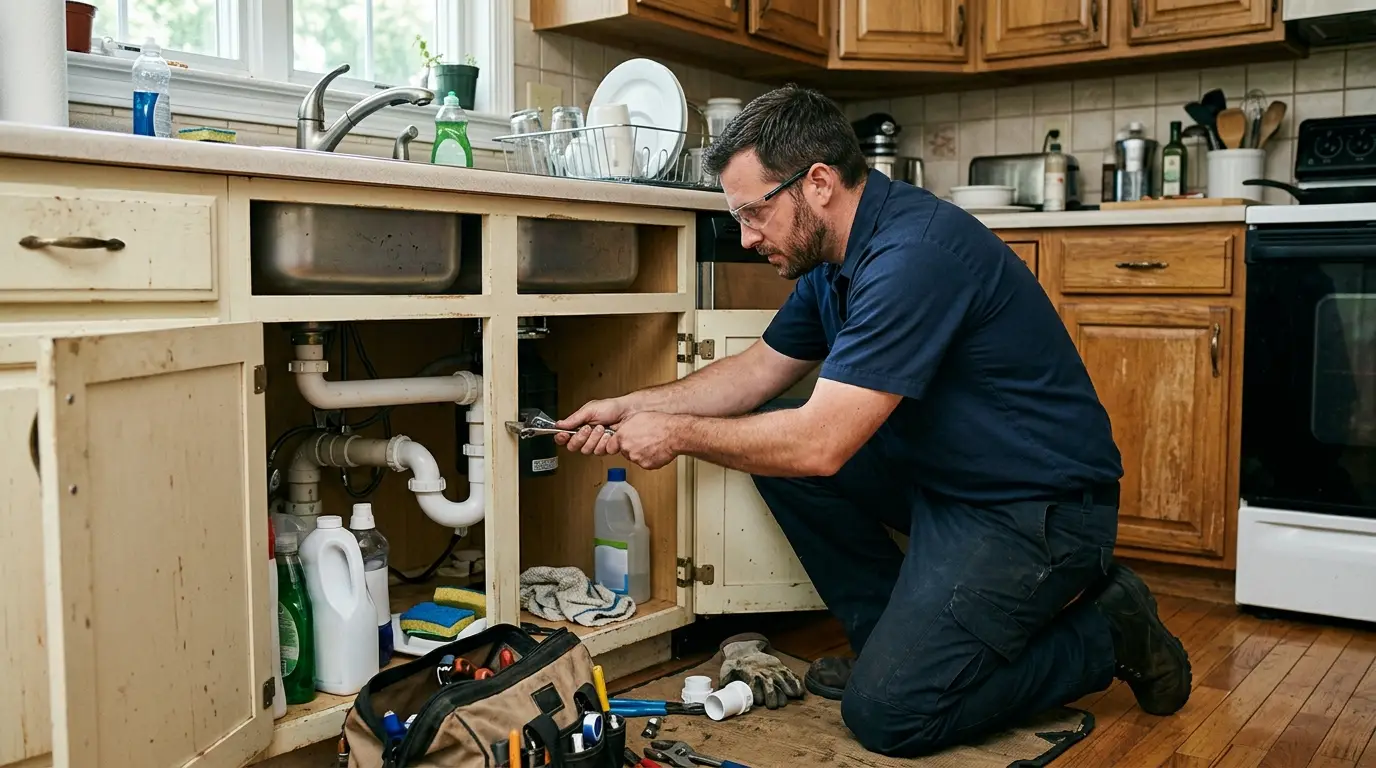
Standing water in the tub, a kitchen sink that empties in its own time, a toilet that bubbles when the washer drains. Cleared properly, with an honest answer about whether it will come back.
Multiple fixtures slow at once usually means the main. Mention that.
A blocked drain is either local or systemic, and knowing which one you have changes everything about the fix. If exactly one fixture is slow and everything else drains fine, the blockage is in that fixture branch, the trap, the arm, or the first few feet of the branch line. That is a straightforward clear.
If several fixtures are slow, or if using one causes another to gurgle or back up, the restriction is further downstream in a shared line or the main. Cabling the tub in that situation buys you a week. The problem is between there and the street, and it needs a camera to be understood rather than a snake to be poked.
Gurgling is the most useful sound in plumbing. It means air is being pulled through water because the line cannot breathe past a restriction or the vent is blocked. When a toilet bubbles as the washing machine drains, that is your drain telling you exactly where to look.
Match your symptom to the likely location before you call, it makes the appointment faster.
If water backs up at a cleanout or floor drain, stop running water and call, that is a main line, not a slow sink.
Most single-fixture blockages are cleared in one visit.
Kitchen lines and sewer laterals fail for completely different reasons, and both are common here. Kitchens block from the inside out: grease cools on the pipe wall, coffee grounds and starch stick to it, and the bore narrows until one bowl of pasta water finishes the job. Nothing dramatic went down the drain, it built for years.
Laterals block from the outside in. Tustin has mature street trees over clay and cast-iron sewer lines from several eras. Roots follow moisture into joints, and once inside they catch paper and grease. That is why some houses on the same street block every winter and others never do.
Cooled fat coats the pipe wall and collects everything else. Hot water and detergent move it a few feet along and it re-hardens.
Hair binds with soap residue into a mat at the trap and stopper. The most common single-fixture blockage in any house.
Lint plus a high-volume discharge into an old two-inch line. Shows up as a standpipe that overflows on the rinse cycle.
Root intrusion at joints, offsets and bellied sections in clay or cast iron. These come back on a schedule until the pipe is addressed.
Diagnose, clear, verify, explain. The last one is the part most people never get.
Run fixtures and watch what affects what. Two minutes of this stops us cabling a branch when the problem is the main.
A cleanout, a roof vent, or pulling a trap or toilet. The right access point clears the line properly instead of pushing the blockage further along.
Cable with the correct head for the pipe size and material, or jet when the line is coated rather than plugged. Cast iron and old clay get the head that will not damage them.
Full-volume flow down the line, not a hopeful trickle. On main lines we run enough water to prove the whole run, and camera it when the history says the pipe itself is the issue.
Grease, hair, roots, a bellied section or an undersized vent. You get told which, because that determines whether this recurs in three months or three years.
Same-day slots most weekdays.
Different blockages need different tools. Using one tool for everything is how drains get cleared twice.
A rotating cable bores through the blockage and pulls debris back. Fast, effective for hair mats, paper blockages and root hair, and the right first move for most single-fixture calls.
Trade-off: Opens a channel through the blockage without necessarily removing the coating around it.
High-pressure water scours the full bore back to pipe wall. The correct answer for grease-coated kitchen lines and for lines that keep re-blocking after cabling.
Trade-off: Costs more and needs a pipe in sound condition. Not for fragile clay or badly deteriorated cast iron.
A recorded look inside the line. Worth doing when a main line has blocked more than once, before you buy a house, or before anyone quotes a dig.
Trade-off: Adds cost and finds nothing new on a one-off hair clog. Essential on a repeat main.
When the camera shows roots at a broken joint, an offset or a belly holding water, cleaning is maintenance, not a fix. Spot repair, lining or replacement ends it.
Trade-off: The largest number on the page, and the only one that stops the cycle.
Pricing follows the line and the access, not the hour. A bath branch through an accessible trap is at the low end. A main line with no exterior cleanout, where we have to pull a toilet or work from the roof, is at the high end because the access is the work.
Beware the very cheap advertised clear. If the price only covers a cable through an easy cleanout, everything else becomes an add-on once someone is standing in your kitchen. You should hear the number, and what happens if the line turns out to be worse than described, before anyone starts.
Priced by the line and the access, quoted before we start.
Stop running water. If a main line is backing up, every flush adds to what is coming into the house. Stop use until the line is clear.
Skip the chemical drain opener. It rarely clears a real blockage, it damages older pipe, and it makes the line hazardous for whoever opens it next. Tell us if you have already used some.
Note what gurgles. Which fixture, and what you were running when it happened. That pair of facts frequently identifies the line before we arrive.
Find your cleanout. Usually a capped pipe at ground level near the house or in the side yard. Clearing brush off it saves time on the invoice.
Where drain calls lead when the line keeps blocking.
If it was a one-off, probably not. If it has now happened twice, the blockage did not leave, the water level dropped enough to find a channel through it. Repeat slow drains on the same line are worth a camera before they become a backup.
For a hair clog in a bath trap, sometimes they work. For anything else they mostly sit in the standing water and corrode the pipe, and they are genuinely dangerous when a plumber opens that trap afterwards. Always tell whoever comes out that you used one.
Almost always grease build-up narrowing the bore, sometimes combined with a long horizontal run at minimal fall. Cabling opens a channel; jetting takes the wall back to bare pipe. If the run is genuinely undersized or badly sloped, no amount of cleaning fixes that and we will say so.
Cabling with a cutting head clears root mass and restores flow, and for many houses that is an acceptable annual or biennial routine. But roots enter through a defect, and they grow back. A camera tells you whether you are managing a small intrusion or postponing a repair.
Two or more fixtures affected, gurgling in one when another drains, water rising in a shower when a toilet flushes, or anything appearing at a floor drain or cleanout. Any of those, stop running water and treat it as a main.
The quote reflects the line and access we agreed on. If the situation on site is different (no cleanout, a main instead of a branch, a fixture that has to come out) you get the revised number and the reason before work continues, not on the invoice.
What is slow, and whether anything gurgles, those two answers tell us a lot.
Kitchen, bath, laundry or main line, cleared with the right tool, verified with real water volume, and explained in plain terms.
(714) 598-4492The plumber we send gives you a firm price before work starts, and stands behind their own workmanship.