Scale on tank internals
Flapper seats, fill valves and jets furring up. The reason a toilet flushes worse each year without anything breaking.
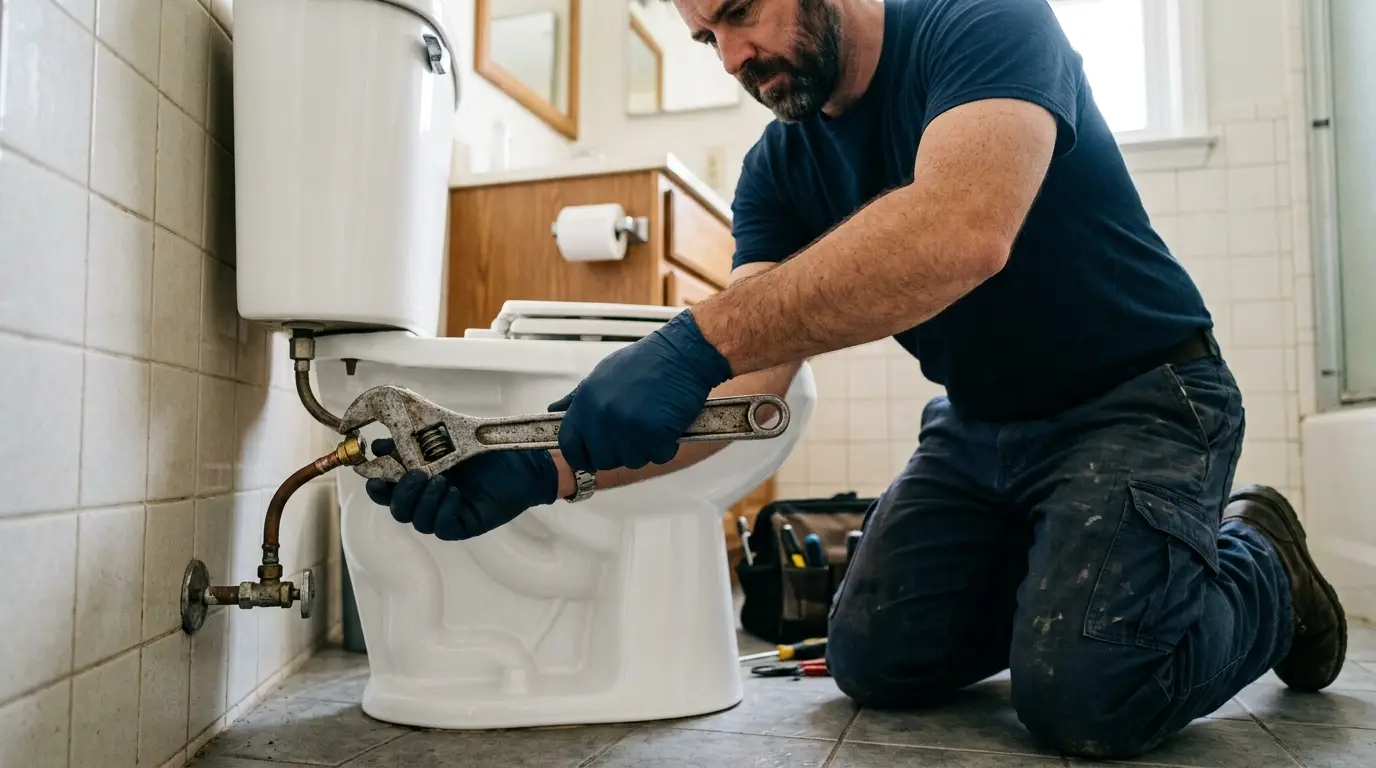
Most toilet faults are a ten-dollar part and half an hour. Some are a failed flange or a leak into the subfloor. The difference matters, and it is worth knowing which one you have before you buy a new toilet.
Water on the floor around the base? Mention it, that is not a fill valve.
A toilet that keeps running is nearly always a flapper that no longer seals or a fill valve that will not shut off. Both are inexpensive parts. What makes it worth fixing promptly is not the annoyance, it is the water: a continuously running toilet can waste more water than the rest of the household uses, and it shows up on the bill before anyone notices the sound.
A weak or incomplete flush is usually the opposite of a plumbing failure. Mineral deposits block the rim jets and the siphon jet so the bowl no longer gets the fast rush of water it needs to start a siphon. Descaling those passages restores a flush that people had assumed was just how their low-flow toilet behaved.
A rocking bowl and a leak at the base are the two that need real attention. Rocking works the wax seal loose, and once that seal is compromised, water and waste go into the subfloor rather than the drain. If the floor around your toilet has gone soft or dark, or there is a persistent smell, the problem is below the toilet, not in the tank.
Match the symptom before you decide it needs replacing.
A cracked bowl or tank is not repairable. Everything else on this list usually is.
Most repairs are a single short visit.
Hard water is the recurring theme. Mineral scale coats flapper seats so they no longer seal, blocks rim and siphon jets so flushes weaken, and shortens the life of every rubber component in the tank. A toilet in this water needs its internals replaced more often than the same model elsewhere.
The other pattern is age of installation. Older homes accumulate flooring layers, and each new layer raises the finished floor relative to the flange. Eventually the flange sits too low for a single wax ring to seal reliably, so the toilet rocks, the seal fails, and someone stacks two wax rings instead of fixing the height. That is the single most common bad repair we find.
Flapper seats, fill valves and jets furring up. The reason a toilet flushes worse each year without anything breaking.
Layers of tile and underlay raise the floor above the flange. Stacked wax rings are a symptom of this, not a fix.
The flange rusts and the bolt slots break away, so the bowl can no longer be held down. Needs a repair flange, not tighter bolts.
First-generation low-flow designs flushed poorly when new. Replacement with a modern high-efficiency model is a genuine improvement.
Diagnose, then fix the actual cause, including what is under the toilet.
Tank internals checked, flush performance observed, base and floor inspected for movement and moisture, and the drain tested if other fixtures are involved.
Flapper, fill valve, flush valve, supply line, closet bolts or a full internals replacement. Jets descaled where a weak flush is scale rather than a fault.
Any leak at the base means the toilet comes up so the flange can be inspected. Guessing at a base leak from above is how subfloor damage happens.
Flange repaired or replaced and brought to the correct height, new closet bolts, new wax or a modern seal, bowl set level and shimmed if needed, then sealed to the floor.
Multiple flushes, the base checked dry, and an honest report on any subfloor damage found underneath, including when that needs a flooring trade rather than us.
Same-day slots most weekdays.
Four paths, and the cheapest one is right more often than people expect.
One failed component, a flapper, a fill valve, a supply line. Cheap, quick, and the correct answer for most running-toilet calls.
Trade-off: If the rest of the internals are the same age, you may be back in a year for the next one.
Replace the whole tank assembly at once. Sensible on an older toilet in a good bowl, especially in hard water where every rubber part is aging together.
Trade-off: Costs more than one part, but generally less than two visits.
Pull the toilet, repair or raise the flange, new bolts and seal, set level. The fix for rocking bowls and base leaks.
Trade-off: More labour than a tank repair, and it is the only thing that actually stops a base leak.
New bowl for a crack, a genuinely poor early low-flow flusher, comfort-height needs or a bathroom refresh. Set on a new flange with a new supply and shutoff.
Trade-off: Highest cost. Worth it for a cracked or badly performing unit, wasted money on a sound one with a bad flapper.
This is the low end of plumbing pricing, and the repairs are honest value. Tank part replacements are a short visit and a cheap component. A reset with flange work is more, because the toilet has to come up and go back properly. A full replacement is the fixture plus the install.
Where cost climbs unexpectedly is subfloor damage. A base leak left running for months rots the material the flange is anchored to, and then the flange has nothing to hold. That is why a wet base is worth calling about rather than mopping around.
Repair and replacement prices, so you can choose.
The dye test. Food colouring in the tank. If colour appears in the bowl without flushing, the flapper is leaking. Cheap fix.
Check the base with a paper towel. Dry around the base after a flush. Any moisture means the seal, not the tank.
Try holding the handle down. If a long hold clears the bowl properly, the flush volume is the issue, often blocked jets rather than a fault.
Do not stack wax rings. If someone has, tell us. It means the flange height was never addressed.
The most common companion calls, and the neighbourhoods where we do this work most.
Yes, and quickly. A phantom refill means water is leaking past the flapper into the bowl continuously, which can waste a remarkable volume over a month. The part is inexpensive and the fix is short, it is one of the best-value plumbing repairs there is.
Repair unless the bowl or tank is cracked, the unit is an early low-flow model that never flushed properly, or you want a different height or style. A sound bowl with failed internals is worth rebuilding, the porcelain is not what wears out.
Either the closet bolts have loosened or the flange under it is failing, often because layers of flooring have raised the floor above the flange. It matters because rocking breaks the wax seal, and then you have a leak into the subfloor rather than a wobble.
Usually a failed wax seal or a flange problem, sometimes condensation on the tank in humid weather, occasionally a cracked bowl. The toilet has to come up to know for certain, and it is worth doing sooner rather than later because the subfloor is what pays for the delay.
Yes. We will check that it fits your rough-in dimension before fitting it, and set it on a new flange seal with new bolts and supply line. Manufacturer warranty stays yours to administer; we stand behind the installation.
Current high-efficiency models flush well, much better than the first generation of 1.6 gallon toilets that gave the category its reputation. If you are replacing an early low-flow unit because it needs two flushes, a modern one is a real improvement rather than a compromise.
Including which replacements are actually worth buying.
Tank repairs, descaled jets, flange resets and replacements, with an honest answer about which one your toilet actually needs.
(714) 598-4492The plumber we send gives you a firm price before work starts, and stands behind their own workmanship.