Drain Cleaning
The first and often only thing a seasonal root blockage needs.
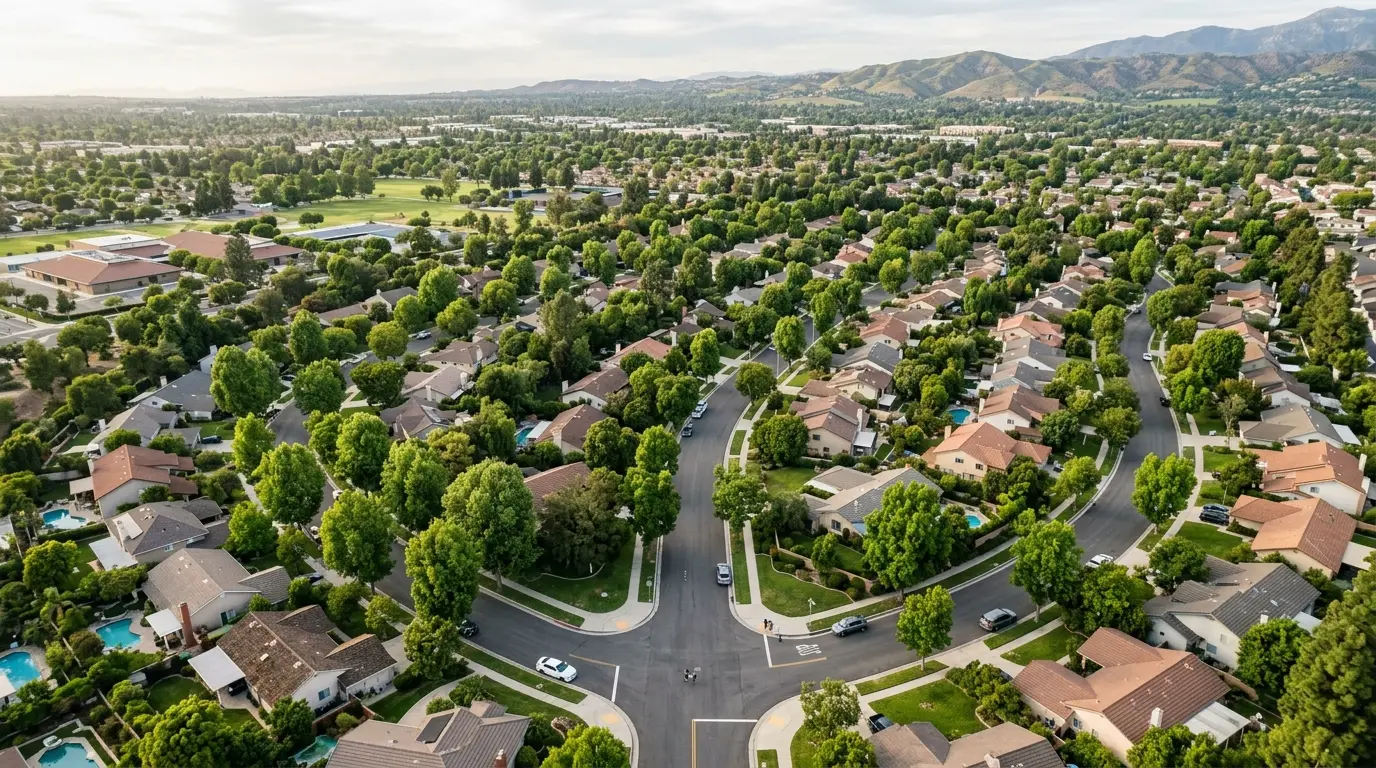
The mature canopy that makes Laurelwood pleasant is also, reliably, in the sewer lateral. Root intrusion is the defining call from these streets, and it is very manageable, right up until it is not.
If it is backing up now, stop using water and call.
Tree roots do not break into a sound pipe. They find an existing weakness (a joint that has shifted, a hairline crack, a connection that was never quite square) and they grow toward the moisture. Once inside, they fan out into a mass that catches everything passing through.
The seasonal pattern people notice is real. Root activity varies through the year, and so does household water use. The result is a blockage that clears with cabling, behaves for months, and returns almost on a schedule. That cycle is fine while it holds. What matters is watching the interval.
When cabling starts buying less time each round (twelve months, then eight, then four) the intrusion has grown past what mechanical clearing can manage, or the pipe itself has deteriorated around it. That is the point where a camera stops being optional, because the choice between spot repair, lining and full replacement depends entirely on what the pipe actually looks like.
The last one is the signal that changes the recommendation.
If cabling is buying less each time, the answer is probably yes.
Laurelwood houses are old enough that the original supply system is at or past a typical service life, depending on material. Copper of this era is generally still sound; galvanized sections are not. Where a house has both (which is common, because sections got replaced piecemeal) the galvanized is the constraint, and it is usually the reason pressure is disappointing at the far end of the house.
Angle stops, hose bibs and main shutoffs on houses of this vintage have frequently not been operated in decades. They seize. On any visit we will test the ones relevant to the work and tell you which are worth replacing while we are there, it costs very little as part of another job and a great deal as an emergency.
The landscaping that causes the root problem is also what makes open trenching expensive to put right. Where the lateral has to be dealt with structurally, trenchless methods keep mature planting and hardscape intact. It is not always possible (the existing line has to be in a condition that allows it) and we camera first rather than promising it up front.
Evidence from a camera, not a sales preference.
Heavily weighted toward drains and laterals, as you would expect.
The first and often only thing a seasonal root blockage needs.
Clears the full bore where cabling only punches through.
Establishes whether the pipe around the roots is still sound.
For joints and sections that intrusion has damaged structurally.
Protects the mature planting that made the problem in the first place.
Where remaining galvanized sections are the pressure constraint.
A functioning exterior cleanout makes every drain call faster and cheaper. Many Laurelwood properties have one; some have had it paved over or buried under planting. If you know where yours is, tell us. If you do not, we will find it and note it for next time.
Where roots are involved, the tree is usually not the enemy. Removing a mature tree is rarely the proportionate answer and we will not recommend it as a plumbing fix. Repairing the pipe so roots have nothing to enter is the durable solution.
Most streets here have easy truck access and driveway parking. Where a jetting job needs a water source, we will confirm the hose bib works before the day rather than discovering it on arrival.
For some Laurelwood houses, scheduled clearing beats reactive call-outs.
Write down the date each time it is cleared: the interval is the single most useful diagnostic you can give us, and nobody remembers it accurately without a note.
Find your cleanout: a capped pipe at ground level, usually near the house or the property line. Knowing where it is saves time on every future call.
Do not rely on chemical root killers: they do very little to an established mass and nothing at all to a damaged joint.
Neighbouring tracts of much the same age.
Almost never, and we will not recommend it as a plumbing solution. Roots enter through an existing defect. Fix the defect (spot repair, lining or replacement) and the roots have nothing to grow into. Removing a mature tree is a large, irreversible action to solve a problem the pipe is causing.
There is no fixed number, but the trend matters more than the frequency. Annual clearing on a stable interval is a legitimate maintenance approach for some properties. Clearing that is needed at shortening intervals means the situation is changing, and that is when a camera earns its cost.
For roots and for accumulated grease and scale, generally yes, cabling punches a hole through a blockage, jetting restores the full bore. But jetting is not appropriate on a pipe that is structurally compromised, which is another reason to camera first on an older line. We will tell you if your line is not a jetting candidate.
A resin liner is drawn through the existing pipe and cured in place, forming a new pipe inside the old one. It works where the host pipe is intact enough to support it and the run is continuous. It avoids trenching, which on a landscaped Laurelwood lot is a substantial saving. It is not suitable for a collapsed line or one with severe offsets.
It can be. A leaking sewer lateral or supply line feeds the ground above it, and the vegetation responds. It is not conclusive on its own (irrigation coverage explains it just as often) but combined with any drainage symptom it is worth a look.
Yes. We answer and dispatch twenty-four hours a day, seven days a week, holidays included. For non-urgent work we will schedule around you rather than telling you which weekday to take off.
The dates tell us more than the symptom does.
Tell us how often it has been cleared and when. That is usually enough to know what comes next.
(714) 598-4492No forms, no queue. A person, right now.