Whole-Home Repiping
The end state for most galvanized houses here. Worth pricing before the third patch, not after.
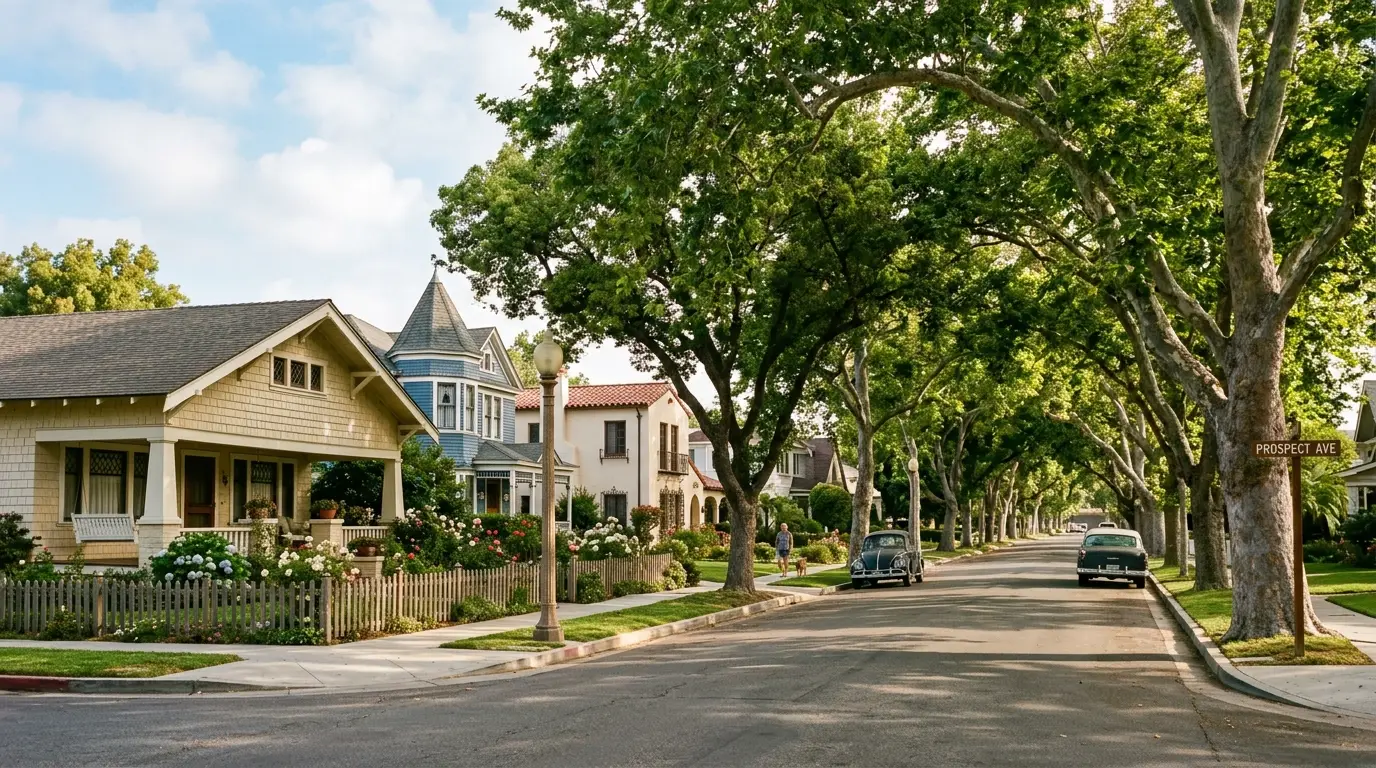
The blocks around the 1887 Tustin Depot hold some of the oldest housing stock in Orange County. Galvanized supply, cast-iron drains and hand-me-down remodels sit under lath and plaster, and they fail differently than anything built after 1970.
Answered around the clock, tell us the street and the age of the house.
An Old Town house rarely has one plumbing system. It has three or four, stacked. The original galvanized supply from the 1920s or 30s is still buried in the walls. Someone ran copper to the kitchen in the 60s. A bathroom got PEX in 2011. The three meet at a dielectric junction nobody can see, and that junction is usually where the leak starts.
Cast-iron drains are the other constant. Sixty to ninety years of scale narrows a four-inch line to two inches of usable bore, and the bottom of the pipe channels out before the top shows any sign of trouble. A camera tells you which of those two problems you have inside ten minutes; guessing costs a lot more than that.
Access matters too. Lath and plaster does not patch like drywall, and original hardwood does not come up and go back down invisibly. Where we open a wall, we say so first, we say how big, and we say what it will look like afterwards.
Any two of these together usually means system-wide, not fixture-level.
Describe it on the phone, we will tell you whether it reads as local or system-wide.
Tight lots, houses close to the street, and service laterals that run under mature street trees. Root intrusion into the lateral is the single most common call on these blocks, and it is seasonal, it shows up when the trees are drawing hardest. A camera inspection before any digging is not optional here; on a lot this tight, knowing the exact depth and offset decides whether the repair is a spot dig or a trenchless pull.
Exterior changes on designated properties carry review requirements, and that shapes the repair before the plumbing does. Where a job would otherwise mean an exterior trench across a visible frontage, trenchless methods and interior routing are worth costing out even when they price higher, the alternative is a permit timeline measured in weeks. We flag this on the phone rather than after the estimate.
A number of Old Town houses have been split into duplexes or have detached rear units. That usually means one service line and one meter feeding two households, which shows up as pressure that collapses whenever the other unit runs a shower. A pressure test at both ends tells you whether the fix is a regulator, a supply upsize, or a conversation with a landlord.
We will tell you what the camera showed, in plain terms, before recommending anything.
Ranked by how often it comes up on these blocks, not by what we would rather sell.
The end state for most galvanized houses here. Worth pricing before the third patch, not after.
Cast-iron laterals and street-tree roots are the defining Old Town combination.
Scale-narrowed cast iron needs a different approach than a modern ABS line.
Finding the failure without opening plaster you cannot invisibly close.
The step that decides spot repair versus full replacement.
Old closets and old venting rarely meet current requirements without work.
Most Old Town lots have a detached garage off an alley and no driveway at the street. Tell us which access is real when you call, a truck that cannot get within a hose length of the cleanout turns a two-hour job into a four-hour one.
Crawl spaces here are shallow and often partly filled with decades of debris. Where the access hatch is under a porch or inside a closet, say so upfront; it changes who we send.
Water shutoff at the street is frequently in a box that has silted over or been paved across. If yours has never been located, finding it before there is an emergency is twenty minutes well spent, and something we will do while we are there on any other call.
On an old house, sequence matters as much as the individual repairs.
Water where it should not be: shut the main if you can find it, then call. If the main will not turn, do not force it, an old gate valve that snaps open is worse than one that leaks.
Sewage backing up: stop all water use in the house immediately, including the washing machine. Every gallon added makes the cleanup larger.
Rusty water only on hot: that is usually the water heater, not the supply lines. Less urgent, but it has a clock on it.
Similar housing stock and similar problems, a few blocks out.
Both are legitimate. Patching makes sense while failures are isolated and years apart. Once you are getting a second failure within a year, or the pressure loss is house-wide rather than at one fixture, patching is buying months at a time at increasing cost. We will tell you which side of that line your house is on, and we do not treat the answer as automatic.
Sometimes, and we will tell you before we start rather than after. Where a repipe route can run through an attic, a crawl space or a closet chase instead of a finished wall, that is what we look for first. Where a wall has to come open, we mark the opening with you, keep it to the smallest workable size, and tell you honestly that lath and plaster patching is specialist work we are not pretending to do invisibly.
It affects exterior work more than interior. Trenching across a visible frontage on a designated property is a different conversation than the same trench behind a fence. We raise it as a factor when it applies and cost the alternatives, we are not the authority on what gets approved, and we will not tell you we are.
There is no useful average. A camera gives you the actual answer for your line: how much bore is left, whether the bottom has channelled out, whether joints have dropped. Two houses on the same block built the same year routinely come back with ten years between them.
Yes, and it is worth planning. Where one service line feeds two households, we schedule the shutoff window with both, and we say up front how long the water will actually be off rather than quoting an optimistic number.
The work often takes longer, and that shows in the estimate, but the rate does not change because of the year on the deed. What we will not do is quote a modern-house number on the phone and revise it upward once we see lath and plaster.
Old houses generate specific questions. Ours is a phone line, not a form queue.
Pre-war construction rewards experience and punishes guessing. Tell us the street, the approximate age and what you are seeing.
(714) 598-4492No forms. No callback queue. A person, now.