Slab Leak Repair
The signature repair for 1960s slab-on-grade construction.
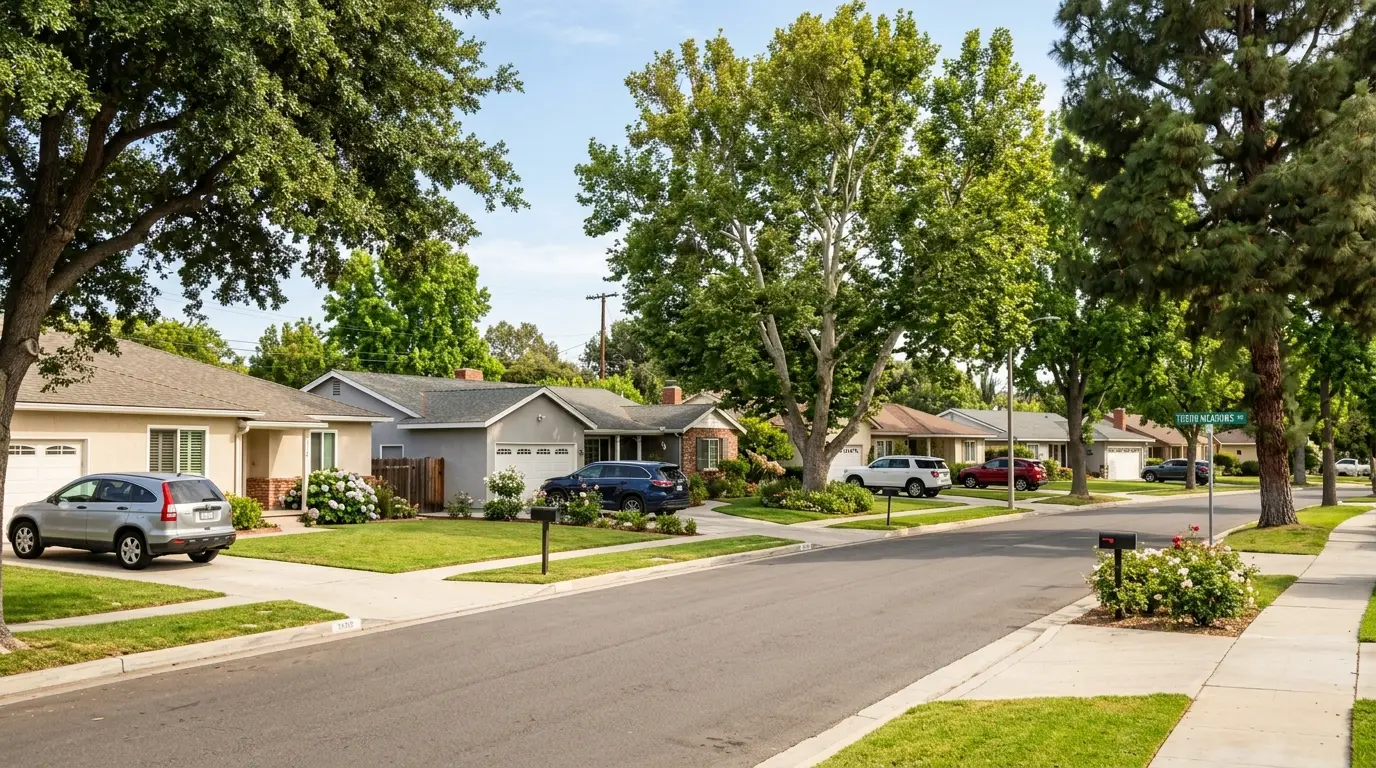
Tustin Meadows was built as a planned community in the 1960s and much of it still has the original bones. That means slab-on-grade supply, garage water heaters, cast-iron or early-ABS drains, and a generation of angle stops that have not been turned since the Nixon administration.
Tell us what you are seeing, these houses have a short list of usual suspects.
These houses were well built for their moment. The moment assumed copper in a slab would last indefinitely, that a water heater in a garage was fine wherever it sat, and that nobody would ever need to shut off a single fixture without shutting the house.
Two of those assumptions have aged badly. Slab-routed hot lines are now at the point where pinholes are routine rather than exceptional, and they announce themselves as a warm floor, an unexplained meter creep or a hot water bill that will not settle. Original angle stops, meanwhile, have seized, and the first time anyone tries to turn one is usually during a job that suddenly got bigger.
The sewer laterals here are mid-life. Not failing wholesale, but old enough that root intrusion, bellied sections and joint separation are all live possibilities. That makes camera work particularly worthwhile in Tustin Meadows: the range of plausible conditions is wide, and the cost difference between the right and wrong repair is large.
Every one of these is cheaper addressed on a weekday than at midnight.
We will tell you what it usually turns out to be in a house like yours.
Hot-side copper under a 1960s slab is the defining Tustin Meadows repair. Detection comes first, pressure isolation to confirm which side is losing, then electronic and acoustic location to find where. Only then is there a real decision to make: spot repair through the slab, reroute overhead through the attic, or repipe the hot side entirely. All three are legitimate in different houses, and anyone who recommends one before locating the leak is guessing.
Almost every original heater location here was designed before current requirements around elevation, seismic strapping, combustion air and venting. That does not make your existing heater unsafe by definition, but it does mean a replacement will usually involve more than swapping the tank, and you should hear that before you get an estimate rather than after. Where a tankless conversion makes sense, the venting and gas supply are the deciding factors, not the marketing.
Root intrusion in Tustin Meadows is seasonal and usually starts at a joint. Bellied sections are the other common finding, a low spot where the ground settled decades ago, holding waste and solids. Cabling clears a root problem and does nothing for a belly, which is precisely why we camera rather than assume. A recurring blockage in the same spot every winter is telling you something specific.
Location first, method second. That order saves money on this housing stock.
Six services cover the overwhelming majority of calls from this neighbourhood.
The signature repair for 1960s slab-on-grade construction.
Confirms which side is losing and where, before anyone opens concrete.
Garage units at or past the end of a sensible service life.
Separates roots from bellies, different problems, different fixes.
Seasonal root intrusion responds well while the line is otherwise sound.
Where the second and third slab leak make piecemeal repair poor value.
Single-storey slab houses have no crawl space, which means no easy inspection route. Everything under the floor has to be found with equipment rather than looked at, and that is a real cost difference from a raised-foundation house. It also means attic reroutes are frequently the least destructive option, because the attic is the only accessible void.
Garages here are often full. If the water heater is behind stored belongings, clearing a working radius before we arrive saves billed time and avoids a conversation about liability for moving your things.
Most Meadows streets have driveway parking and easy truck access, which helps. Where a job needs a jackhammer inside the house, we will tell you about noise, dust containment and how long the floor will be open before you commit to that route.
After two slab leaks the arithmetic usually changes. We will show you how.
Read the meter with everything off: if the low-flow indicator moves, you have a leak somewhere. That single test has caught more Meadows slab leaks than any other.
Find the date on the water heater: the serial number encodes it. Past twelve years, plan for replacement rather than waiting for the failure.
Turn every angle stop once a year: a stop that still turns is worth a great deal on the day you need it.
Neighbouring tracts with much the same construction and much the same list.
The reliable indicators are a warm spot on the floor, the meter moving with all fixtures off, an unexplained jump in the water bill, or the sound of running water with nothing running. Any one of those justifies a detection visit. None of them justify opening the slab before the leak is located.
It depends on how many leaks you have had and where the line runs. A first leak in an accessible spot is often a straightforward repair. A second leak on the same line usually means the pipe is at the end of its service life throughout, and continuing to patch it is buying short intervals at full price each time. We will lay out both costs rather than steering you.
That pattern is classic root intrusion, trees draw hardest in certain conditions and the intrusion is worst when the line is otherwise carrying more. It is very treatable while the pipe itself is sound. It is also worth cameraing once, so you know whether you are managing roots or managing a structural defect.
Probably not dangerous, but it is well past a sensible replacement point and it is in a garage, which is where most catastrophic tank failures do the most damage. We would rather you replaced it on a Tuesday of your choosing than at 3am on a Sunday.
On a house of this age, usually not, that is exactly the design assumption that has aged badly. We plan for a whole-house shutoff on this work and tell you how long it will be, which is normally under an hour per fixture group.
Not on age alone, and we will not push you to. The trigger is evidence: repeated leaks, pressure loss across the house, or a detection visit that finds more than one active issue. Until then, targeted repair is the honest recommendation.
A phone call is free. A wrong guess through a slab is not.
Slab-on-grade, garage heaters, mid-life laterals. Tell us the symptom and we will tell you the usual cause.
(714) 598-4492Any hour, holidays included. A person, not a queue.