Sewer Camera Inspection
Locates grade-transition faults along long, irregular runs.
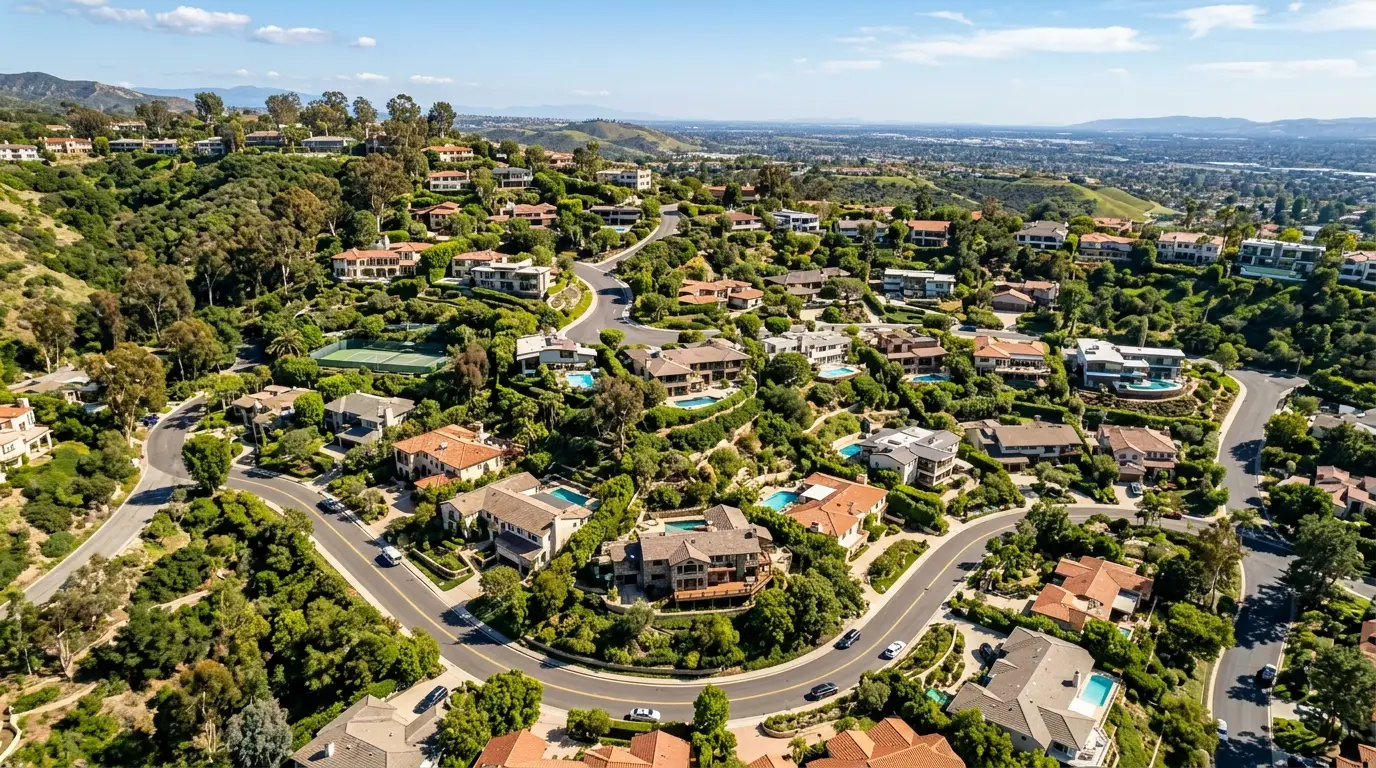
Cowan Heights sits high and irregular. Lots follow the terrain rather than a grid, service runs are long and rarely straight, and a good number of these houses have been extended enough times that no single plan describes them.
Terrain and access matter here, mention both when you call.
On a graded tract, the supply line goes from the meter to the house by the shortest route and the lateral goes from the house to the main the same way. In Cowan Heights neither is true. Lines follow what the terrain allowed at the time, around outcrops and along contours, and they were often extended when the house was.
That has a specific consequence: locating matters more than almost anything else. A camera with a locator gives depth and position along the whole run, and on ground like this the difference between knowing and guessing is measured in excavation you will otherwise pay to restore twice, once to dig and once to put the hillside back.
Pressure is the other terrain effect. Elevation costs static pressure, so higher properties can sit at the weak end of the zone and lower ones can run hard enough that regulation is doing real work daily. Neither is unusual. Both need equipment that has actually been tested rather than assumed.
On irregular terrain, plumbing symptoms often lag the cause by years.
On this ground, precision is most of the value.
Gravity laterals crossing sloped, uneven terrain fail where the grade changes, offsets, bellies and separated joints at the transitions. Those points are rarely where an owner would guess, and cabling a long run blind is working across a distance where the fault could be almost anywhere. One camera pass with a locator turns a speculative dig into a targeted one, and on a hillside that is the whole cost difference.
Large irregular lots usually carry substantial irrigation, and the interaction between irrigation demand and household supply produces complaints that get blamed on the wrong component. A pressure log across a full irrigation cycle (rather than a single spot reading) separates a supply limit from a regulator fault from a scheduling problem. Where a booster is involved, its tank and switch matter more than the pump itself.
Properties here have often been extended, partly rebuilt, or built around older infrastructure. Abandoned runs still connected, shutoffs in places that made sense to somebody in 1978, occasionally a legacy well or line nobody can date. Mapping it is real work and it stays useful for as long as you own the place. We would rather spend the first hour understanding the property than the third hour surprised by it.
Shutoffs, zones and runs, documented. Useful for years.
Infrastructure and diagnosis, weighted by terrain rather than by house age.
Locates grade-transition faults along long, irregular runs.
Hillside restoration is the dominant cost of open trenching here.
Long private supply runs across ground that moves.
Elevation makes regulation a working component, not fit-and-forget.
Finds losses on runs too long and too buried to inspect by eye.
Access matters at 2am. We plan for it rather than discovering it.
Cowan Heights is unincorporated, so permitting and inspection go through Orange County rather than the City of Tustin. That changes process and timeline on permitted work. We flag when something is likely to need a permit; we are not the authority on county requirements and will not pretend to be.
Access is the practical constraint. Steep or narrow driveways, private roads and long distances from the street all decide what equipment can physically reach the work. Describe the approach when you call and we will send a vehicle that can get there, the alternative is a wasted visit you would still be paying for.
Fire-access and brush-clearance rules affect some properties here in ways that occasionally intersect with where equipment can be staged. If you know of a restriction on your road, mention it.
One thorough visit beats several reactive ones on a property this complex.
Measure pressure at the highest and lowest fixture: the difference between the two tells you more than either number alone.
Walk the downslope after dry weeks: a supply leak on a hillside surfaces below the break, often well below it.
Keep every locate and camera report: on a long irregular lateral this is the most valuable paperwork you can hold.
The neighbouring unincorporated hillside communities.
Very possibly. Saturated ground moves, and on a slope even small movement produces offsets at the points where a lateral changes grade. The symptom usually appears months or years after the movement rather than immediately, which is why the connection gets missed. A camera along the run will show whether the profile has changed.
Because on this terrain the alternative is excavation you cannot target. A locate gives depth and position along the whole run, which means one dig in the right place instead of two or three in plausible ones, and every dig on a hillside carries restoration cost well beyond the plumbing. It is the cheapest part of the job and it decides the expensive parts.
Often, and this is exactly where it earns its price. Restoring a slope after open trenching involves more than replanting. Whether your line is a candidate depends on its condition and whether there is a continuous run to work with, the camera establishes that first, and we will tell you plainly if the answer is no.
Maybe, but test before buying. Elevation accounts for some of it as a matter of physics. What matters is the starting pressure for your zone and whether the existing regulator is performing. Where a booster genuinely is the answer, sizing it to actual demand matters more than the brand.
The process differs more than the substance. Unincorporated Cowan Heights goes through Orange County, and that mostly affects timelines on permitted work. We will tell you when a job is likely to need a permit so you can plan around it.
Tell us about it when you call and we will answer honestly. Some access needs a smaller vehicle and some jobs need equipment that will not fit at all, in which case there is usually an alternative approach. Discovering that on the day helps nobody.
Steep, narrow or private road? Say so and we will plan for it.
Long runs, moving ground and one-off systems. Tell us the property and what it is doing.
(714) 598-4492A person answers, any hour, holidays included.