Emergency Plumbing
In attached housing, response time has a multiplier on it.
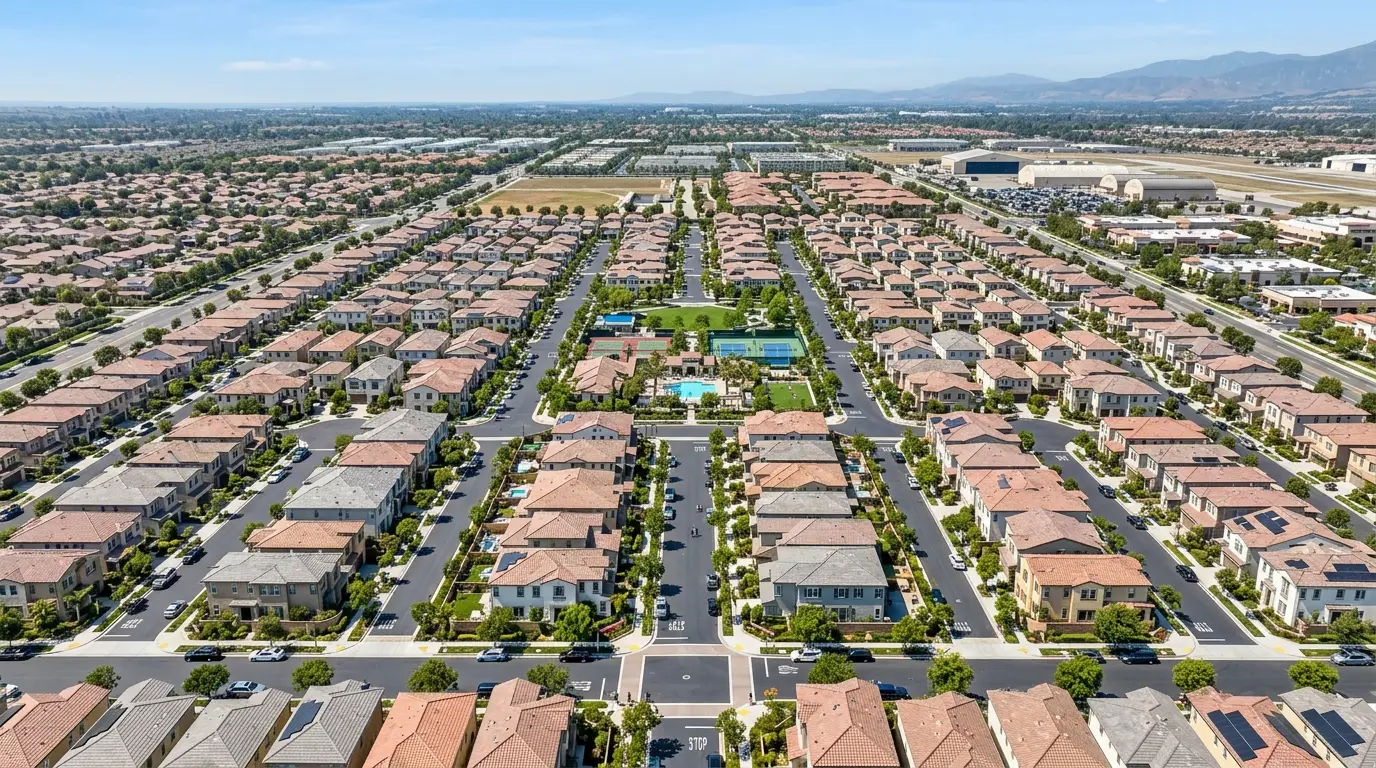
Columbus Square is dense, relatively new, and largely attached. That combination changes the calculus on every leak: the question is not only what failed, but whose ceiling it lands on and which shutoff actually isolates it.
If water is moving between units, say so first, it changes our response.
In a detached house, the first move on a leak is to find it. In attached construction, the first move is to isolate it, and the shutoff that does that is not always the one inside your unit. Getting that wrong costs a neighbour a ceiling.
Columbus Square homes are new enough that corrosion is not the story. What we see instead is installation-era faults surfacing, appliance-side failures, and the pressure and water-chemistry issues that affect the whole Legacy footprint. Tankless units need descaling. Regulators need checking. Supply lines to washers and toilets remain the most common cause of significant water damage in houses of this age, anywhere.
The other Columbus Square factor is documentation. When water crosses a party wall, what matters afterwards is a clear record of where it originated. We establish that first and put it in writing, because the alternative is two households guessing at each other.
In attached construction, prevention is worth noticeably more than it is elsewhere.
Worth knowing before you need to know it at 2am.
On any urgent call in attached housing we identify and confirm the isolation point before opening anything. In practice that sometimes means a shared riser shutoff, sometimes a unit valve, and occasionally a main serving several homes. Knowing which one applies to your address in advance genuinely shortens a 2am response, and it is something we will note for you on any routine visit.
The equipment profile here mirrors the wider Legacy footprint: tankless heaters, softener loops, recirculation on some plans. Descaling is the single highest-value maintenance item, and in a dense development it is also the one most often skipped, because a unit in a utility closet is out of sight until it faults. We will tell you a realistic interval rather than selling you an annual contract you do not need.
When a leak has affected more than one home, the plumbing repair is the easy part. The valuable part is establishing origin and cause clearly enough that everyone involved is working from the same facts. We document what we find, we photograph it, and we give you that record. What we do not do is offer opinions on who owes whom, that is between the parties and their association.
Clear origin and cause, in writing. It matters later.
Weighted toward speed of isolation and appliance-side maintenance.
In attached housing, response time has a multiplier on it.
Establishing origin precisely matters more when a wall is shared.
Service and descaling for the dominant equipment on this footprint.
High street pressure is a Legacy-wide factor, not a per-house quirk.
Supply lines and fill valves cause most avoidable water damage here.
Straightforward upgrades in houses where nothing structural needs touching.
Columbus Square operates under association rules covering exterior work, common areas and in some cases contractor access hours. We will tell you when a job touches something that is plainly common rather than unit-side, but we do not interpret your CCRs and we will not tell you what your association will approve.
Guest and service parking is limited in parts of the development. If there is a loading area or a specific place a service vehicle should go, mention it when you call, it saves time we would otherwise bill you for circling.
Utility closets in these plans are tight. Where a replacement unit has to fit a specific footprint and clearance, we measure before recommending, not after you have bought something.
Cheaper than the alternative, and in attached housing considerably so.
Find and test your shutoff: confirm it turns and confirm it actually stops water to your unit. Both parts matter.
Replace old braided hoses: washer and toilet supplies. It is a twenty-minute job that prevents the most common serious loss.
Book the tankless descale: if it has never been done and the house is over three years old, it is overdue.
The rest of the Legacy-footprint neighbourhoods.
Call us and call your neighbour, in that order if you can only do one first. Stop water use in your own home. The upstairs unit needs to shut off at their isolation point, which may not be obvious to them. We will establish origin and document it, which is the record both households will need afterwards.
It varies by plan and by building. Some units have a full isolation valve inside; some rely on a riser shutoff serving several homes. We will identify yours and note it for you, it is a five-minute job on any visit and it is the most useful thing you can know in this kind of housing.
That is a CCR question and we genuinely cannot answer it for you. What we can do is establish precisely where the failure originated and whether it sits in unit-side or common plumbing, documented clearly. That is the input to the decision, not the decision.
Tankless units lose output to scale, not to age. Fifteen years without descaling in this water is well past the point where performance drops. The unit may well be fine, it may just need the service it has never had.
Yes, twenty-four hours including holidays. For attached housing we would rather you called immediately than waited for morning, because the damage curve is steeper when there is a neighbour underneath.
For interior, unit-side plumbing, generally not. For anything touching common elements, exterior surfaces or shared systems, that is between you and your association, and we will tell you clearly which category the work falls into so you can ask the right question.
Plan type and building matter in attached housing. Tell us both.
Attached housing rewards a plumber who thinks about the neighbour’s ceiling before picking up a tool.
(714) 598-4492Answered by a person, any hour.